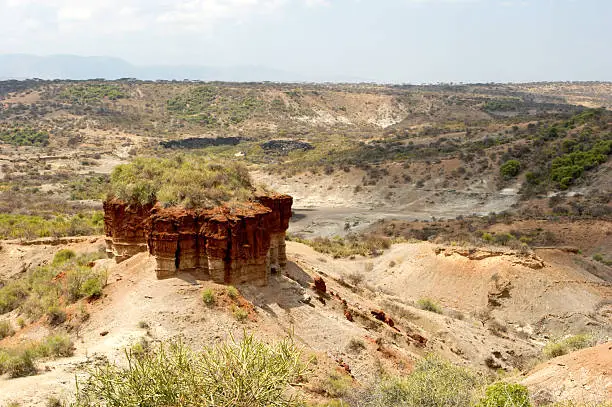

A landmark study published in Nature has announced that the oldest confirmed human-crafted bone tools date to an astonishing 1.5 million years ago, recovered from Tanzania\’s legendary Olduvai Gorge. The discovery extends the known timeline of bone tool technology by hundreds of thousands of years and forces a reappraisal of just how innovative our distant ancestors truly were.
Tools With Unmistakable Purpose
The assemblage includes animal bones that display unambiguous evidence of deliberate modification — percussion scars, ground-down surfaces, and sharpened tips that no natural taphonomic process could have produced. Scientists categorized the tools into functional groups: digging implements, hide-working scrapers, and sharply pointed instruments likely employed to process vegetation or crack open other bones for their nutritious marrow.
The tools are attributed to Homo erectus, a human ancestor species that inhabited Africa and portions of Asia from roughly 1.9 million to 100,000 years ago. While Homo erectus was already credited with producing refined stone implements, the deliberate use of bone as a manufacturing material at this remote date is entirely without precedent.
A Different Kind of Engineering
Working bone demands a fundamentally different skill set than working stone. Whereas stone tools are produced through knapping — striking one rock against another to detach sharp flakes — bone must be shaped through sustained grinding, controlled scraping, and precise percussion. The capacity to master multiple raw materials implies a degree of cognitive versatility and adaptive problem-solving that was previously ascribed only to significantly younger hominin species.
Bone also possesses physical qualities unavailable in stone: it can be fashioned into thin, springy implements and honed to a needle-fine point. The Olduvai evidence suggests our ancestors recognized and exploited these unique material properties far earlier than any expert had predicted.
Adding to a Storied Legacy
Olduvai Gorge has occupied a central place in the study of human origins since Louis and Mary Leakey commenced their groundbreaking fieldwork there in the middle of the 20th century. This latest revelation adds yet another chapter to the gorge\’s unfolding narrative of human ingenuity, demonstrating that technological invention and environmental adaptation were hallmarks of our lineage from its very earliest stages.