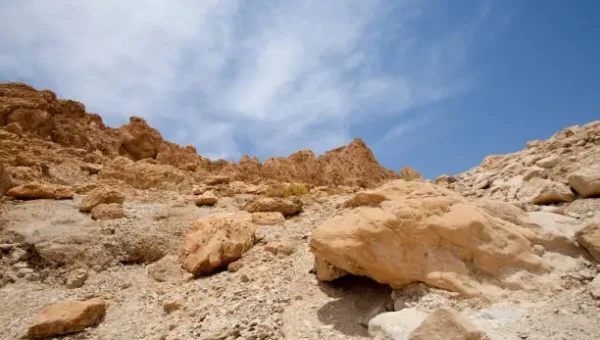

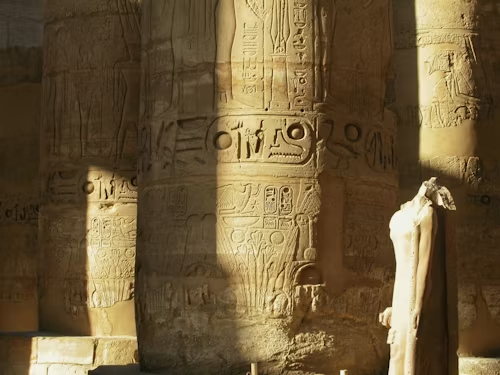
Researchers from the French Institute of Oriental Archaeology have recovered iron shackles from the Ghozza mining complex in Egypt\’s Eastern Desert, delivering stark physical proof of the forced labor system that powered Ptolemaic gold extraction during the 3rd century BCE. The find strips away any abstraction from what ancient literary sources described in chilling terms.
The Physical Record of Cruelty
The restraints were unearthed amid a broader collection of artifacts at what was evidently a working settlement servicing gold mining operations. Their design matches descriptions of slave chains preserved in classical Greek and Roman texts, and their archaeological context removes all ambiguity about their function — they existed to prevent workers from fleeing the mines.
The Greek historian Diodorus Siculus left behind harrowing accounts of conditions inside Egyptian gold mines. Laborers were driven underground into suffocating tunnels where they crushed quartz by hand to liberate gold dust, often toiling in pitch darkness. Prisoners of war, condemned criminals, and even their families were dispatched to these mines as a death sentence; few survived more than a handful of years.
Gold That Built an Empire
Egypt\’s Ptolemaic Dynasty, established by a general from Alexander the Great\’s inner circle following Alexander\’s death in 323 BCE, depended on gold to underwrite military ambitions, diplomatic relations, and the legendary monuments of Alexandria. The Eastern Desert mines were the treasury\’s lifeblood.
Until now, excavations at mining sites had turned up tools, residential areas, and ore processing installations — but no restraints. The Ghozza shackles therefore represent the first tangible archaeological confirmation of what literary sources had long alleged: that the entire Ptolemaic mining apparatus was sustained through systemic forced labor.
Voices Silenced by History
The discovery carries a sobering resonance, reminding us that the architectural marvels and cultural triumphs of antiquity frequently rested upon the broken bodies of nameless, enslaved individuals. As ongoing fieldwork expands across the Eastern Desert\’s mining landscape, archaeologists aim to recover more evidence about the daily existence and ultimate fate of these workers — people whose contributions to history were vast but whose personal stories have been almost entirely erased.
Related Discoveries