Egypt\’s most recognizable archaeologist, Zahi Hawass, has announced that a previously undetected void discovered within the Great Pyramid at Giza will be publicly unveiled sometime in 2026. The declaration, delivered at the 44th Sharjah International Book Fair, has electrified both the academic world and a global public that has never lost its fascination with the sole surviving Wonder of the Ancient World.
Tantalizing but Vague
Hawass has offered few specifics, maintaining deliberate secrecy about what exactly was found. What is publicly known is that advanced detection methods — including muon tomography, a technique that leverages subatomic particles from cosmic radiation to peer through solid stone — have pinpointed structural anomalies within the pyramid that do not correspond to any previously mapped corridor or room.
This revelation builds on a 2017 ScanPyramids announcement of a sizeable void situated above the Grand Gallery, a finding that generated worldwide scientific excitement. Whether Hawass is referring to the same feature or an entirely separate discovery remains unclear.
Forty-Five Centuries of Secrets
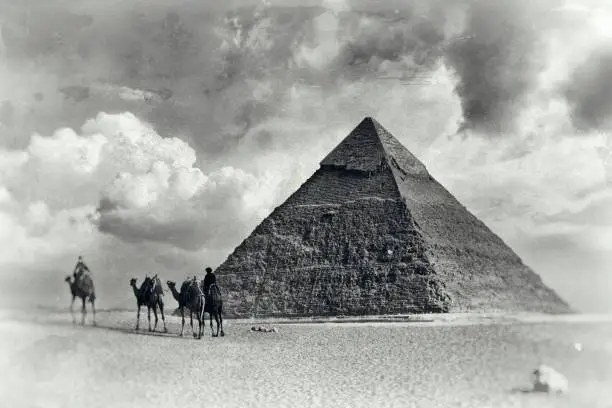
Erected around 2560 BCE as the eternal resting place of Pharaoh Khufu, the Great Pyramid held the title of tallest human-built structure for an astounding 3,800 years. Despite centuries of exploration by everyone from medieval Arab treasure hunters to modern physicists, the monument continues to withhold its deepest secrets. Only three internal spaces have been confirmed — the King\’s Chamber, the Queen\’s Chamber, and an incomplete subterranean room — but architects and engineers have long theorized that additional voids exist within the structure\’s estimated six million tons of limestone.
Any confirmed new chamber, even if completely empty, would represent a seismic development in Egyptology. The spatial arrangement alone could settle longstanding debates about construction techniques that scholars have argued over for generations.
Speculation and Anticipation
Hawass\’s announcement has predictably triggered a spectrum of reactions ranging from rigorously scientific conjecture to uninhibited fantasy. Regardless of what the concealed structure ultimately proves to be, its revelation will underscore a fundamental truth: even the most intensely studied archaeological monument on Earth still possesses the capacity to astonish.