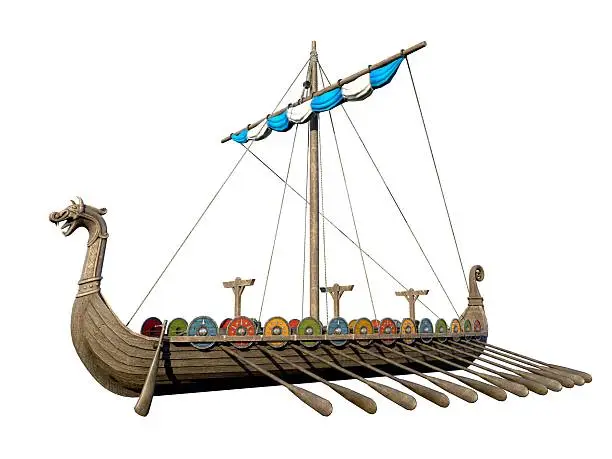

On the remote shores of Senja Island in Norway\’s far north, construction workers stumbled upon scattered iron rivets — a telltale signature of a Viking-era vessel hidden beneath the soil. What followed was the careful excavation of an eighth-meter boat containing the skeletal remains of a woman and a small dog, dating to roughly 900 to 950 CE. The find challenges entrenched assumptions about who merited the most prestigious burial rites in Norse culture.
Uncovering a Noble Farewell
Once archaeologists took over the site, they methodically exposed the timber vessel and its contents. Alongside the woman\’s remains, the team recovered ornamental brooches, glass and amber beads, a utilitarian knife, and specialized tools — a collection that collectively signals a person of considerable standing within her community. In Norse tradition, boat burials were reserved for the highest-ranking individuals, symbolizing the vessel that would ferry the deceased into the realm beyond death.
Rethinking Gender in the Viking Age
Popular imagination tends to cast Vikings exclusively as male raiders and seafarers, but archaeological work over the past several decades has steadily complicated that picture. High-status female burials, female warriors, and women who clearly held positions of economic or spiritual authority are increasingly well documented across Scandinavia. The celebrated Birka warrior grave in Sweden, long assumed male, was definitively identified as female through DNA testing in 2017, shattering a century of gendered assumptions.
No weapons accompanied the Senja burial, so the woman probably was not a combatant. Nevertheless, the sheer prestige of a boat interment and the quality of her grave goods leave no doubt she wielded significant social influence — perhaps as a landholder, merchant, or ritual leader.
What the Soil Preserved
The cold, acidic soils typical of northern Norway have acted as a natural preservative, safeguarding organic materials that would have vanished long ago under milder conditions. Scientific teams are now conducting DNA extraction and isotopic analysis on the skeletal remains, studies that could illuminate where the woman grew up, what she ate, and whether she was related to other known Viking-era individuals. Meanwhile, conservators are painstakingly treating the boat timbers for future public display.
Related Discoveries